How to Track Competitor Prices and Discounts on Shopify

The short answer
Track your competitors' best sellers weekly: list price, sale (compare-at) price, discount codes, free shipping threshold and bundles. A spreadsheet works for a few stores; automated tracking catches flash sales. Use the patterns to plan your own promotions instead of matching every price cut.
A competitor drops their best seller by 20% and your sales dip for a week before you notice. Or they run a sale every two weeks and you match it every time, training your customers to wait for discounts. Tracking competitor prices isn't about copying them. It's about knowing what your customers see when they compare, so you can decide when to respond and when to hold your price.
This guide covers what to track on Shopify competitors, how to do it by hand or automatically, and how to read the patterns.
Why track competitor prices at all?
Because customers compare. Most shoppers check more than one store before buying something that isn't an impulse purchase. If a competitor is 30% cheaper this week, your conversion rate will show it before your analytics explain it.
Price tracking answers three practical questions:
- Is a sudden change in my sales caused by a competitor? A sale or a new low price is often the reason.
- How do competitors use discounts? Constant sales, a few big events, or almost never.
- Where is the market price heading? Prices sliding toward cost mean the product is getting saturated.
What should you track besides the price?
The list price changes rarely. Competitors move other levers far more often.
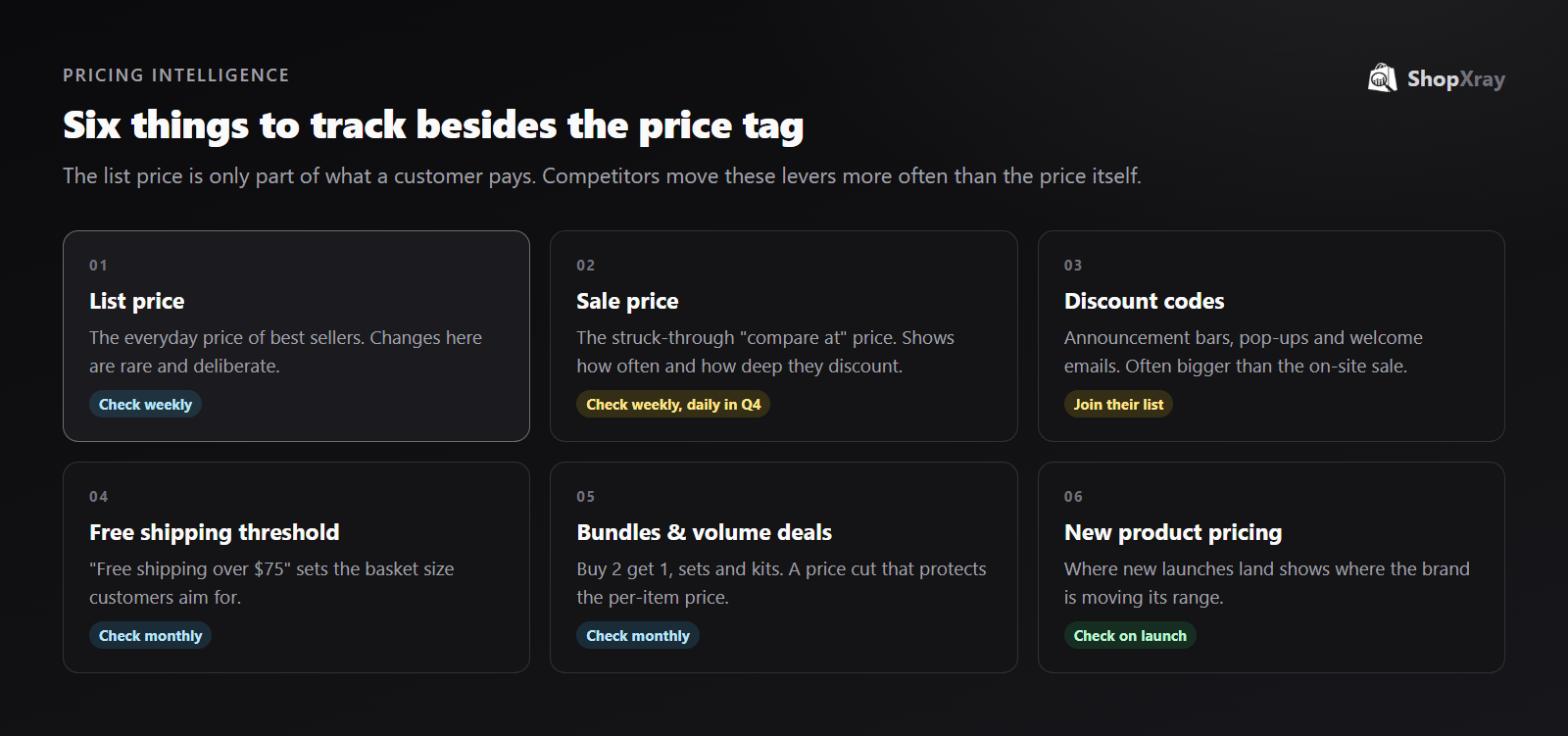
- List price of their best sellers. Find those first with the best-selling sort.
- Sale price. On Shopify stores, a struck-through price is the product's "compare at" price. How often it appears tells you how promotion-driven the store is.
- Discount codes. Announcement bars, pop-ups and welcome emails. These are often deeper than the on-site sale.
- Free shipping threshold. "Free shipping over $75" quietly sets the basket size customers aim for.
- Bundles and volume deals. "Buy 2, get 1 free" cuts the effective price without touching the list price.
- Pricing of new launches. Where new products land shows where the brand is taking its range.
How do you track prices manually?
For three to five competitors, a spreadsheet works:
- List the 10–20 products that matter: your direct competitors' best sellers and the products closest to yours.
- Record the price, sale price and any visible offer once a week, on the same day.
- Sign up for each competitor's email list and SMS with a dedicated inbox. Most discount codes are sent, not shown.
- Screenshot the homepage and announcement bar whenever you check. Offers disappear without a trace.
- Note the date of every change. The pattern matters more than any single price.
The weak spot is frequency. A weekly check misses flash sales, and it falls apart once you're watching more than a handful of stores.
How do you track prices automatically?
Automated tracking checks competitor products on a schedule and records every change, including variant prices and sales that only last a day. With ShopXray's Shopify price history tracking, you add a competitor's store once and get a history of every price change on every product, with alerts when they move.
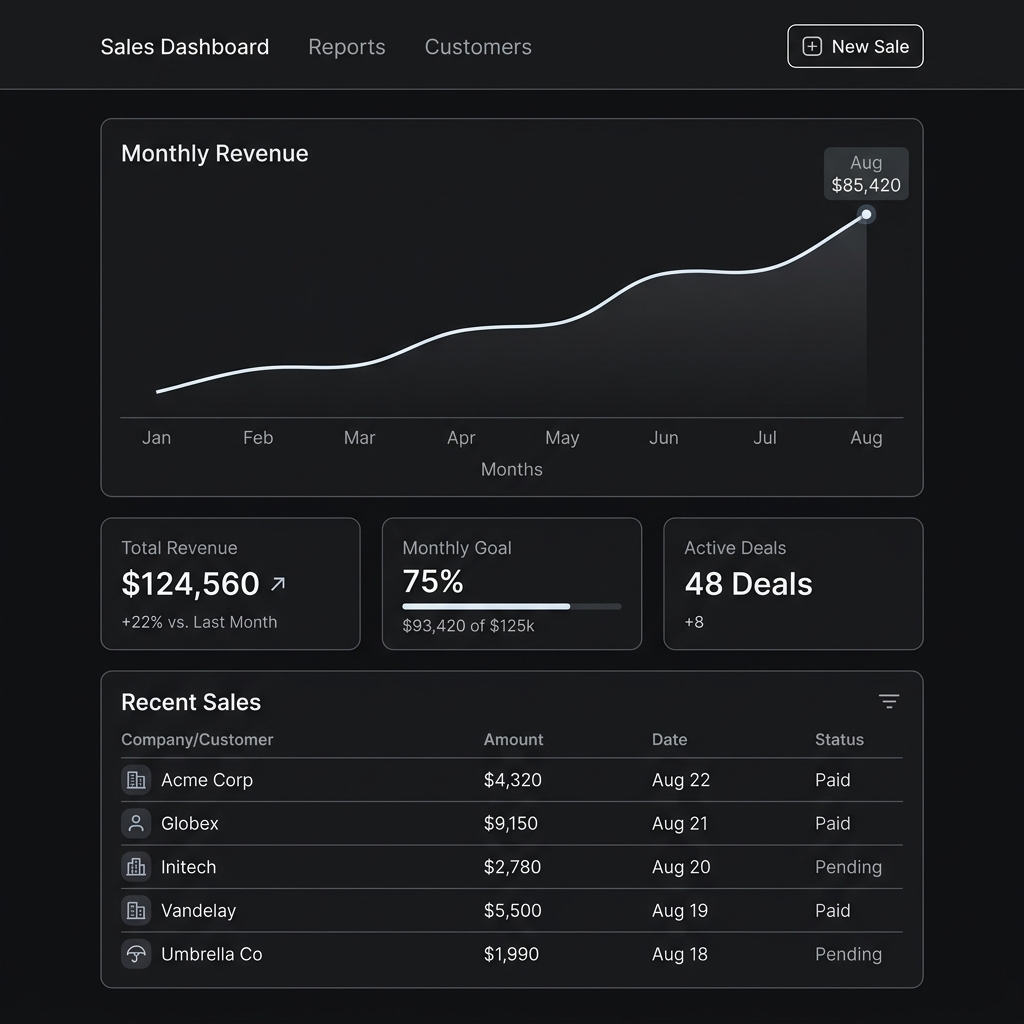
Automation matters most in the busy season. In the weeks around Black Friday, prices can change several times a day.
When do competitors usually run sales?
For US-focused stores, discounts cluster around a predictable calendar:
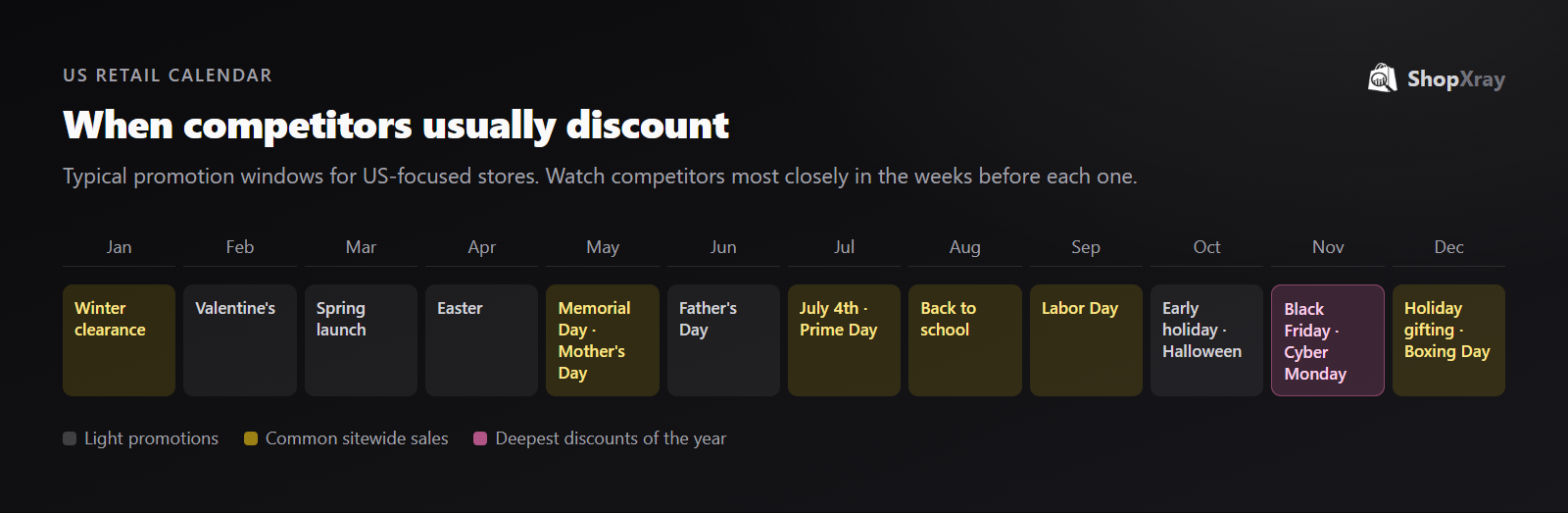
Watch competitors most closely in the two or three weeks before each window. That's when they test early offers, change free shipping thresholds and warm up their email lists. For Black Friday and Cyber Monday, many stores start "early access" sales well before the weekend itself.
How do you read the patterns?
Once you have a few months of data, look for these patterns:
| Pattern | What it usually means | How to respond |
|---|---|---|
| Frequent sitewide sales (every 2–4 weeks) | Margins are built around discounts; customers wait for sales | Don't match every sale. Compete on value, bundles and service |
| Rare but deep sales (2–4 times a year) | Strong full-price demand, discounts used for big moments | Plan your own events around theirs, not on the same days |
| Gradual price drops across many stores | The product is getting saturated | Differentiate or move to a new product |
| Price increases on best sellers | Rising costs, or confidence in demand | An opportunity to hold your price and look like the better deal |
| New launches priced higher than the range | The brand is moving upmarket | Leave room for yourself at the value end, or follow with a better product |
Should you match a competitor's price?
Usually not straight away. Matching every cut starts a race to the bottom that nobody wins, and it teaches your customers to wait for discounts. Before you respond:
- Check if it's temporary. A weekend sale isn't a new price.
- Check if it's the same product. Different materials, sizes or shipping times justify different prices.
- Compete on the offer. A bundle, faster shipping, a better guarantee or a gift with purchase often beats a price cut and protects your margin.
- Respond on your own calendar. If they always discount on the last weekend of the month, run your promotion a week earlier.
Price is one part of the picture. Our Shopify competitor analysis framework covers the rest: products, apps, traffic and ads.
Frequently asked questions
How can I see a competitor's price history on Shopify?
Shopify stores don't show past prices. You need to record them over time, either manually in a spreadsheet or with a price tracking tool that checks the store on a schedule and logs every change.
What does the struck-through price on a Shopify store mean?
It's the product's "compare at" price, which the merchant sets to show a discount. How often it appears, and how far below it the real price sits, tells you how promotion-driven the store is.
How often should I check competitor prices?
Weekly is enough for most of the year. In the weeks before Black Friday and other big sales, check daily or use automated tracking, because prices can change several times a day.
Should I lower my price when a competitor does?
Not automatically. Check whether the change is temporary and whether the products are truly comparable, then consider competing with a bundle, faster shipping or a better guarantee instead of a price cut.
How do I find competitors' discount codes?
Sign up for their email and SMS lists with a dedicated inbox, and watch their announcement bar and pop-ups. Most codes are sent to subscribers rather than shown on the site.


